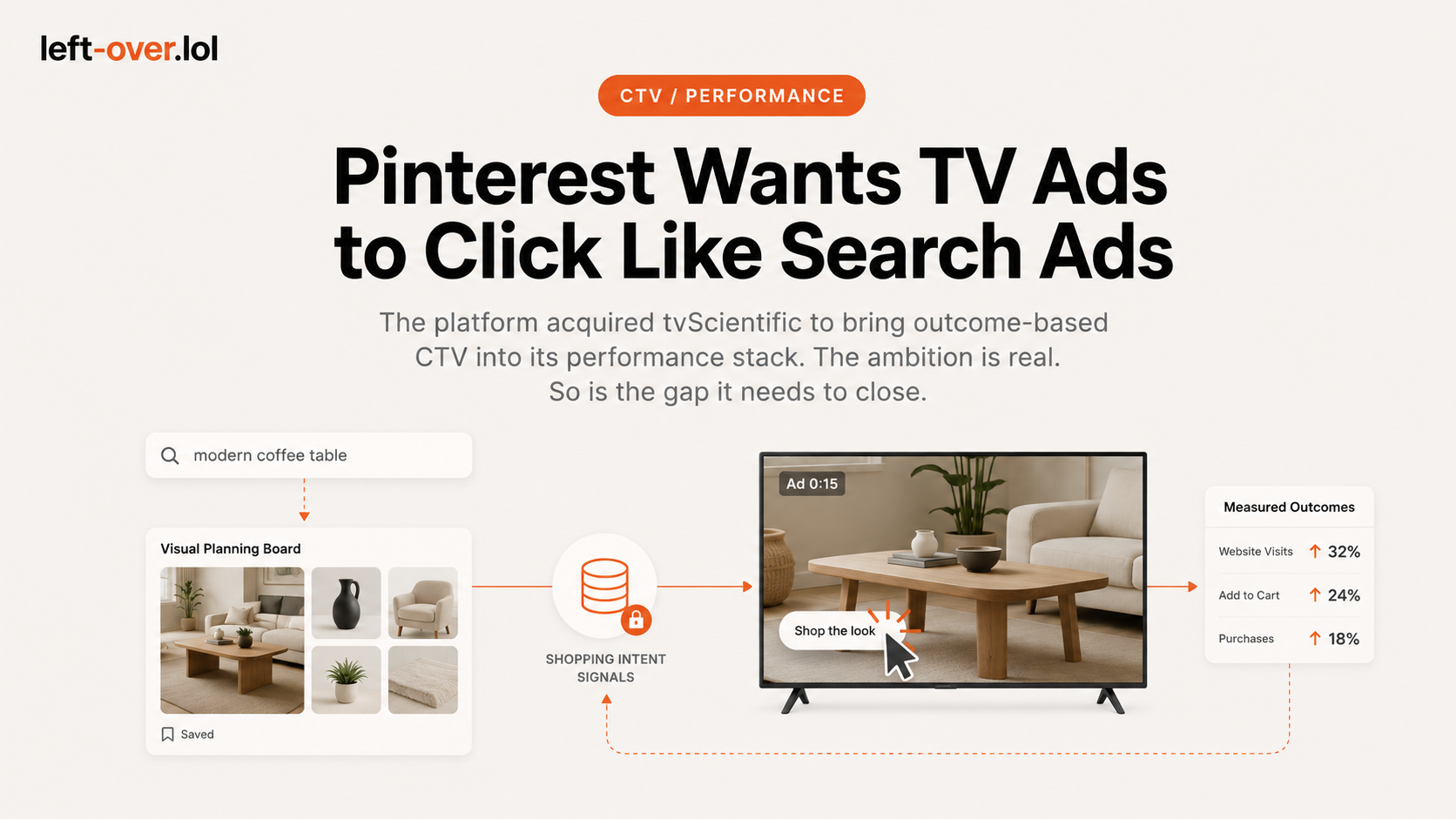
Search advertising works because intent precedes the ad. Someone types 'running shoes' and the ad for running shoes appears. The signal and the placement are aligned. Performance follows.
Pinterest has spent the last three years arguing that its platform offers the closest thing to that signal outside of search: people actively planning purchases, creating boards, saving products they intend to buy. The company calls it 'taste graph.' Agencies call it 'upper funnel with a lower-funnel lean.'
The tvScientific acquisition is Pinterest's attempt to take that argument to television.
tvScientific built outcome-based CTV infrastructure, campaigns that optimize against real-world results rather than impressions or reach. Think a retailer running a TV campaign and measuring whether exposed households actually purchased, not just whether they saw the ad. The announced deal connects tvScientific's attribution and optimization layer to Pinterest's Performance+ product.
The structural argument is more interesting than the press release made it sound. Most CTV performance plays come from reach-first platforms, streamers and vMVPDs that built audiences on content and are retrofitting measurement after the fact. Pinterest is starting from intent. It has planning signals that predate the media buy, which creates the possibility of matching a household's expressed shopping intent with a CTV impression before the campaign even runs.
That's different. Not definitively better, TV viewing behavior and Pinterest planning behavior don't map one-to-one, but different enough that media buyers should pay attention.
The gap Pinterest needs to close is scale. tvScientific is not a large platform. Pinterest's CTV inventory is not extensive. Performance+ exists but is not the first product agencies think of when they're allocating video budgets. The acquisition buys capability; it doesn't buy market position.
What it does buy is a story. Pinterest can now walk into a media planning conversation and say it offers shopping intent, native creative formats, and outcome-based TV, in one buy. Whether buyers believe that story depends on whether the measurement holds up in the field.
The pitch is clean. TV ads that work like search ads, powered by the internet's largest collection of purchase intent signals.
It's a good pitch. The industry should ask to see the numbers.