The NFL has been the most powerful entity in American media for two decades. It sells the most valuable inventory on television, commands the highest CPMs in linear advertising, and has successfully extracted rights fees that have restructured the economics of every major broadcaster that carries its games.
Now it owns a piece of the broadcaster.
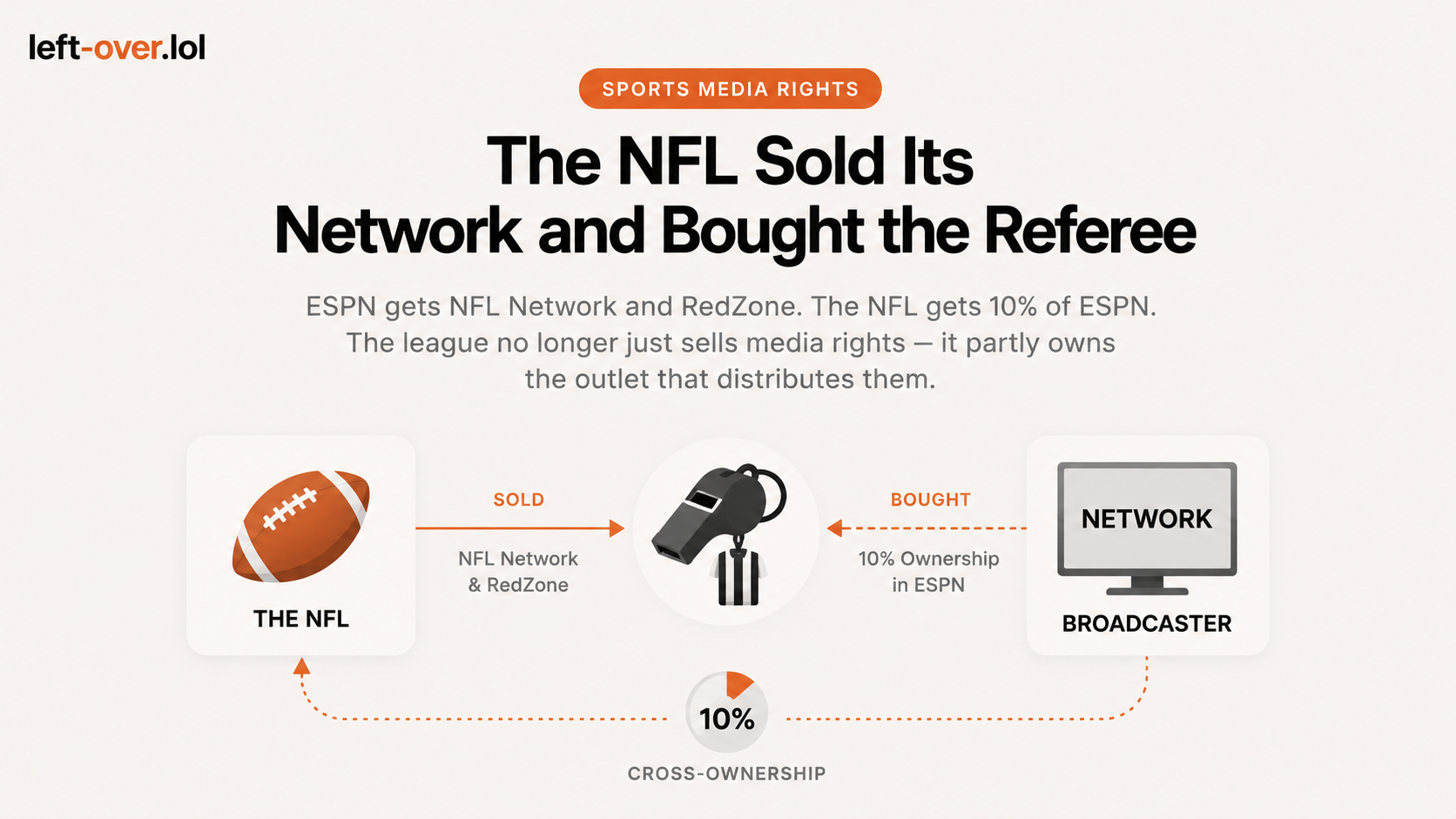
ESPN will receive NFL Network, RedZone, and associated media assets. The NFL receives a 10% equity stake in ESPN. The deal restructures the relationship between the league and its most important distribution partner from a vendor arrangement into a partial ownership structure.
The advertising implications are significant and underreported.
When the NFL was a pure rights licensor, media buyers could negotiate directly with ESPN, Fox, CBS, and NBC for NFL inventory. The league's influence was indirect, its ratings determined the price, but it wasn't at the table when the buy happened. That dynamic shifts when the league holds equity in one of the networks selling the inventory.
This doesn't mean the NFL will sit in on upfront negotiations. It means the NFL's interests are now formally aligned with ESPN's advertising revenue in a way they weren't before. The league benefits when ESPN's ad business does well. That's a different incentive structure.
The deal also accelerates the NFL's transformation from a sports league into a media company. NFL Network was the first step, the league owned a cable channel that carried its own content. The ESPN equity stake is the next step, the league now has an ownership interest in the platform that carries its most valuable rights.
The logical endpoint of this progression is a league that eventually distributes its own games directly to consumers at scale, without a broadcaster intermediary. The ESPN relationship may delay that outcome by tying the NFL's financial interests to the broadcaster's success. Or it may accelerate it by giving the NFL a front-row seat to how a major sports media company operates from the inside.
Either way, the people who buy NFL advertising inventory should understand that the entity setting the terms for that inventory just got more vertically integrated.
The NFL was already the most expensive real estate in television. Now it's also a landlord with a stake in the building.